
Introduction to the XRP Ecosystem
In the vast and often noisy cryptocurrency landscape, one digital asset stands apart not for promising to replace the global financial system, but for striving to make it work better. That asset is XRP. Emerging from a vision to solve the inherent inefficiencies in cross-border payments, XRP and the underlying XRP Ledger have carved out a unique niche. Unlike many cryptocurrencies born from purely ideological or speculative motives, XRP was engineered with a specific utility in mind: to move value as fast, reliably, and affordably as information moves over the internet today. It represents a pragmatic bridge between the traditional world of banking and the new frontier of decentralized digital assets. This article will embark on a deep exploration of XRP, dissecting its technology, its purpose, the controversies it has navigated, and its potential trajectory in the evolving financial ecosystem. We will move beyond the surface-level price discussions to understand the fundamental architecture and the real-world problems it seeks to solve, from liquidity challenges in correspondent banking to the settlement layers of tomorrow’s financial networks. XRP
The Foundational Technology: The XRP Ledger
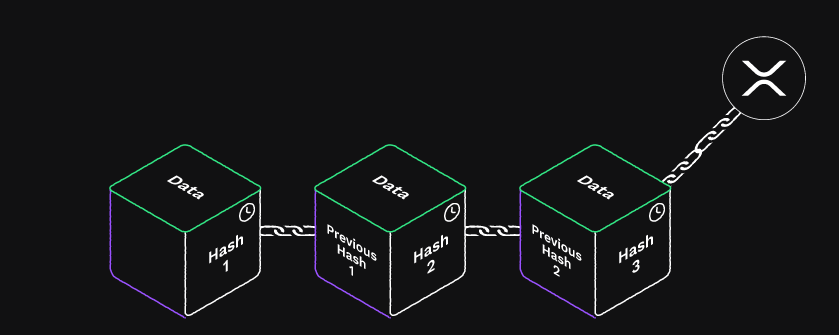
At the heart of the XRP asset lies the XRP Ledger, an open-source, decentralized cryptographic ledger powered by a network of peer-to-peer servers. It is crucial to understand that the XRP Ledger existed before the company Ripple; it is a public infrastructure, much like the internet itself. The ledger’s consensus protocol is its most defining technical feature. Unlike Bitcoin and Ethereum, which use energy-intensive Proof-of-Work mining to validate transactions and secure the network, the XRP Ledger uses a novel Consensus Protocol. This mechanism relies on a unique node list of trusted, decentralized validators to agree on the order and validity of transactions. This process happens every 3-5 seconds, making it exceptionally fast and consuming negligible energy compared to mining-based blockchains. This design choice reflects the ledger’s core mission: to be a high-performance utility for financial settlement. The ledger natively supports the issuance of various tokens, known as Issued Currencies, and complex features like decentralized exchange, escrow, and payment channels. However, its native digital asset, XRP, serves three primary functions within this ecosystem: a bridge currency for transferring value, a source of liquidity for financial institutions, and a spam-prevention mechanism by requiring a tiny amount of XRP (destroyed, not paid as a fee) for each transaction.
The Distinct Purpose and Utility of XRP
While many cryptocurrencies position themselves as “digital gold” or platforms for decentralized applications, XRP’s utility is laser-focused on payments and liquidity. Its core value proposition is solving the Trillion-Dollar Liquidity Problem. In today’s cross-border payment systems, banks and payment providers must pre-fund nostro/vostro accounts in destination currencies, tying up colossal amounts of capital that sits idle. This process is slow, expensive, and opaque. XRP can serve as a neutral, instant settlement layer that eliminates the need for this pre-funded capital. Here’s a simplified analogy: Instead of a US bank holding millions in Euros in a UK account (and a UK bank holding dollars in the US), both could use XRP as a bridge. The US bank converts dollars to XRP, sends the XRP across the XRP Ledger in seconds, and the receiving institution instantly converts the XRP to Euros. This unlocks trapped capital and dramatically reduces costs and settlement times from days to seconds. This utility isn’t just theoretical. It’s the foundation of Ripple’s suite of products, like RippleNet and On-Demand Liquidity, which use XRP to facilitate real-time, cross-border transactions for financial institutions and payment providers around the globe. The asset’s speed (settling in 3-5 seconds), low cost (fractions of a cent per transaction), and scalability (handling 1,500+ transactions per second) make it uniquely suited for this role.
XRP vs. Bitcoin and Ethereum: A Comparative Analysis
Understanding XRP necessitates contrasting it with the two other major digital assets. The differences are foundational, stemming from their distinct design philosophies and intended use cases. Bitcoin was created as a decentralized, peer-to-peer electronic cash system and has evolved primarily into a “store of value” or “digital gold.” Its Proof-of-Work consensus prioritizes censorship-resistant decentralization and security over speed and cost, resulting in slower settlement times (10+ minutes per block) and higher, variable transaction fees, especially during network congestion. Ethereum, meanwhile, is a general-purpose programmable blockchain, a “world computer” designed to host smart contracts and decentralized applications. Its utility lies in its flexibility and ecosystem, though this has also led to scalability challenges and high gas fees. XRP, in stark contrast, is a purpose-built “digital asset for payments.” It is not mined; all 100 billion XRP were created at the ledger’s inception. Its consensus protocol is designed for performance, prioritizing speed, finality, and low cost for its singular focus: efficient value transfer. The table below summarizes these key distinctions:
| Feature | XRP (XRP Ledger) | Bitcoin | Ethereum |
|---|---|---|---|
| Primary Purpose | High-speed, low-cost payments & liquidity | Store of Value / Digital Gold | Smart Contracts & dApps Platform |
| Consensus | Consensus Protocol (Validator Agreement) | Proof-of-Work (Mining) | Proof-of-Stake (Validators Staking ETH) |
| Transaction Speed | 3-5 seconds | ~10 minutes (can be hours for full confirmation) | ~15 seconds (varies with network load) |
| Transaction Cost | ~$0.0002 on average | Highly variable, can be $10+ | Highly variable, can be $10+ during congestion |
| Supply | Fixed 100B (deflationary via transaction burn) | Capped 21M (inflationary until ~2140) | No hard cap (currently ~120M, issuance managed post-merge) |
| Energy Use | Negligible | Very High | Very Low (post-Merge) |
“XRP is designed to be a highly efficient tool for a specific job—moving value. It’s less about ideological revolution and more about pragmatic evolution of the existing financial infrastructure.” – A common summation by industry analysts.
The Relationship Between Ripple the Company and XRP the Asset
This is perhaps the most critical and misunderstood aspect of the XRP ecosystem. Ripple is a private technology company that was founded in 2012. It is a major participant in and contributor to the XRP Ledger’s development, but it does not own or control the XRP Ledger, which remains an open, decentralized network. Think of Ripple as a company that builds critical infrastructure and applications on top of the public XRP Ledger, much like a company building web services on the internet. Ripple’s primary products, such as RippleNet, leverage the XRP Ledger and the XRP asset to provide solutions to its customers, primarily financial institutions. At the ledger’s inception, 100 billion XRP were created. Ripple was given a significant portion (initially placed in escrow) to fund its operations, incentivize market makers and partners, and promote the development of the XRP Ledger ecosystem. The company regularly sells small portions of its XRP holdings to fund operations, a point of contention for some in the community. However, it’s vital to recognize that XRP exists and functions independently of Ripple. The XRP Ledger has been running independently since 2012, and XRP can be held, traded, and used by anyone without any involvement from Ripple. The company is the most prominent advocate and user of the technology, but the asset’s fate is not solely tied to the company’s fortunes.
Navigating the Regulatory Landscape: The SEC Lawsuit and Its Resolution
The trajectory of XRP was dramatically altered in December 2020 when the U.S. Securities and Exchange Commission filed a landmark lawsuit against Ripple Labs Inc. and two of its executives. The SEC alleged that the company’s distribution of XRP constituted an unregistered securities offering worth over $1.38 billion. This event sent shockwaves through the cryptocurrency industry, leading many U.S.-based exchanges to delist XRP and creating immense uncertainty for holders and developers. The core legal question was whether XRP should be classified as a security under U.S. law (like a stock or bond) or as a currency or commodity. Ripple mounted a vigorous defense, arguing that XRP is a digital currency with utility, not a security, and that the SEC’s action was an overreach that lacked fair notice. The legal battle lasted nearly three years, with the court delivering a pivotal Summary Judgment in July 2023. The ruling was a mixed, but largely favorable, outcome for Ripple. The judge determined that XRP, as a digital token, is not in and of itself a security. However, she found that Ripple’s institutional sales of XRP to sophisticated investors constituted unregistered securities transactions. Critically, the judge ruled that programmatic sales of XRP on public digital asset exchanges (where buyers had no direct knowledge of Ripple) and other distributions (like for developer grants) did not constitute securities offerings.
This ruling provided unprecedented clarity. It effectively distinguished between sales to institutional investors under contract and the secondary market trading of the asset by retail participants. The SEC’s attempts to appeal aspects of this ruling were largely denied. In October 2023, the SEC moved to dismiss all remaining claims against Ripple’s executives, signaling the effective end of the lawsuit. The resolution has been hailed as the most significant legal victory for the cryptocurrency industry in the United States, setting a crucial precedent that not all digital assets are automatically securities. It led to the relisting of XRP on major U.S. exchanges like Coinbase and Kraken and restored confidence for many institutional partners operating in the U.S. market. The clarity, while not absolute, has allowed Ripple and the broader XRP ecosystem to operate with renewed certainty and focus on growth.
XRP in Practice: Real-World Use Cases and Adoption
Beyond the technology and legal battles, XRP’s true test lies in real-world adoption. Its primary use case continues to be in the realm of cross-border payments and treasury management for financial institutions. RippleNet’s On-Demand Liquidity product, which utilizes XRP as a bridge currency, is live in dozens of payment corridors globally. Companies like MoneyGram (prior to the lawsuit), SBI Remit, FlashFX, and numerous others have leveraged this technology to send billions of dollars in value. The benefits are tangible: settlement in seconds instead of days, cost reductions of 40-70% compared to traditional methods, and the elimination of pre-funding requirements. For example, a financial institution in Japan can send yen to a partner in Mexico; the yen is converted to XRP, transmitted instantly, and converted to pesos, all within a single user experience. Beyond payments, XRP and the XRP Ledger are being explored for other applications. Central Bank Digital Currencies are a growing area of interest. The XRP Ledger, with its built-in decentralized exchange and issuance capabilities, is being evaluated as a potential infrastructure layer for minting and settling CBDCs, allowing for interoperability between different national digital currencies. Additionally, features like the XRPL EVM Sidechain are bringing Ethereum-compatible smart contract functionality to the ecosystem, enabling developers to build decentralized finance applications, NFT marketplaces, and more, leveraging the speed and low cost of the XRP Ledger while accessing the EVM toolset. This expands XRP’s utility from a pure payment rail to a broader platform for innovation.
The XRP Community and Decentralized Governance
A powerful force behind XRP is its dedicated and often passionate global community. Unlike projects governed by a single foundation, the XRP Ledger operates on a principle of Decentralized Validator Governance. Anyone can run a validator node, and the network relies on a Unique Node List (UNL) – a list of trusted validators that participants agree upon to achieve consensus. Major entities like Ripple, universities (e.g., MIT), exchanges, and community members run these critical nodes. The community drives development through proposals called XRP Ledger Standards (XRPLs). Any developer can propose an upgrade or new feature. If it gains enough support from validator operators and the broader community, it can be implemented via the amendment process, where a supermajority of validators must agree to enable it. This process has successfully deployed numerous upgrades, including the aforementioned sidechain capability and improved payment features like Checks and Escrow. The community also fosters a vibrant ecosystem of independent projects: wallets like Xumm, analytics platforms like XRPScan, and developer tools that enhance the ledger’s utility. This decentralized, organic growth is a key indicator of the XRP Ledger’s health and resilience as a public good, independent of any single corporate entity.
Criticisms and Challenges Facing XRP
No analysis of XRP is complete without addressing the criticisms and challenges it faces. The most persistent critique is the perceived centralization of the XRP Ledger, often focused on Ripple’s initial large XRP holdings and its influence over the default UNL. Critics argue this contradicts the decentralized ethos of cryptocurrency. Proponents counter that decentralization is a spectrum, and the ledger’s validator set is diverse and growing more decentralized over time, with Ripple-controlled validators no longer constituting a majority. The SEC lawsuit, even with its favorable outcome, cast a long shadow, stunted U.S. growth for years, and highlighted the ongoing regulatory uncertainty for all digital assets. From a market perspective, XRP’s price is often criticized for not reaching the speculative highs of other assets, which holders attribute largely to the lawsuit’s market suppression. Furthermore, the competitive landscape is fierce. XRP faces competition from other blockchain payment solutions (Stellar Lumens is a direct competitor with similar goals), from established banking consortia like SWIFT evolving their own systems (SWIFT GPI), and from the rise of stablecoins, which some argue can serve a similar bridging function without the price volatility of XRP. Finally, the “utility over speculation” narrative, while a strength, can also be a challenge in a market often driven more by hype and meme culture than by fundamental use. Educating the market on its complex value proposition remains an ongoing task.
The Future Trajectory and Potential of XRP
Looking ahead, the future of XRP appears more clearly defined than it has in years. The legal clarity from the U.S. court has removed a monumental obstacle, reopening doors to institutional partnerships and exchange listings in the world’s largest economy. The focus is now squarely on execution and adoption. Key areas to watch include the continued expansion of On-Demand Liquidity corridors and the onboarding of new financial institution partners, particularly those who were previously hesitant due to regulatory concerns. The development of the XRPL EVM Sidechain and the growth of a DeFi and NFT ecosystem on the XRP Ledger could attract a new wave of developers and users, diversifying XRP’s utility beyond payments. Interoperability projects that connect the XRP Ledger with other major blockchains could further enhance its role as a liquidity bridge for the entire digital asset space. Regulatory developments will continue to be paramount; how the U.S. Congress ultimately legislates for digital assets will significantly impact XRP’s operational environment. Furthermore, the broader macroeconomic adoption of blockchain technology by traditional finance (TradFi) plays to XRP’s strengths as a compliant, institutional-grade solution. Its potential role in the CBDC infrastructure could be a game-changer, positioning it as the neutral settlement layer between national digital currencies. While challenges remain, the combination of a proven, high-performance technology, a clarified legal status, and a growing track record of real-world use provides a solid foundation for XRP’s future as a cornerstone of the evolving global financial system. XRP Ledger Foundation
Conclusion
XRP occupies a unique and critical space in the digital asset universe. It is not a speculative meme, nor is it trying to be an anonymous digital cash or a world computer. It is a precision-engineered tool for moving value, designed to solve a multi-trillion-dollar problem of liquidity and friction in global finance. Its journey—from its innovative technological beginnings, through a grueling legal battle for its very identity, to its emerging role in powering real-time international payments—demonstrates a resilience and utility that sets it apart. While debates about its degree of decentralization and its price performance will continue, its fundamental value proposition remains strong: to enable the instant, low-cost, and reliable movement of value anywhere in the world. As the lines between traditional finance and decentralized technology continue to blur, XRP’s role as a pragmatic bridge is likely to become not just relevant, but increasingly essential.
Frequently Asked Questions (FAQs)
Is XRP a security?
Following the July 2023 U.S. court ruling, XRP itself is not considered a security. The court distinguished between institutional sales by Ripple (which were deemed securities transactions) and the programmatic sale of XRP on exchanges to the general public, which is not.
What is the difference between Ripple and XRP?
Ripple is a private technology company that builds payment solutions using the XRP Ledger. XRP is the native digital asset of the public, decentralized XRP Ledger blockchain. XRP can exist and function independently of Ripple.
How is XRP different from Bitcoin?
Bitcoin uses energy-intensive mining (Proof-of-Work) for security and is primarily viewed as a store of value. XRP uses a fast, low-energy Consensus Protocol, has a fixed supply, and is designed specifically for fast, low-cost payments and liquidity solutions.
Where can I buy and store XRP?
XRP is listed on major global cryptocurrency exchanges like Coinbase, Kraken, Binance, and others. It can be stored in a variety of wallets, including hardware wallets (Ledger, Trezor), software wallets (Xumm, Exodus), and exchange wallets.
What is XRP used for?
Its primary use is as a bridge currency in cross-border payments to provide instant liquidity and reduce costs. It is also used to pay for transaction fees on the XRP Ledger and is increasingly being used in DeFi, NFTs, and as a potential infrastructure for CBDCs.