
Understanding the 25th December For many around the globe, the twenty-fifth of December immediately conjures images of Christmas trees, gift exchanges, and festive carols. However, within the borders of Pakistan, an Islamic Republic, the holiday on this day carries a profoundly different and deeply significant national meaning alongside the Christian religious observance. The 25th December holiday in Pakistan is, in fact, a dual commemoration: it is the birthday of the nation’s founder, Muhammad Ali Jinnah, officially known as Quaid-e-Azam Day, and it is also Christmas Day for the Christian minority community. This confluence creates a unique tapestry of patriotism and religious harmony that is distinctly Pakistani. To view this day solely through a single lens is to miss the rich, layered narrative that defines Pakistan’s socio-cultural identity. This article will explore the historical gravity of Quaid-e-Azam Day, the serene celebration of Christmas within the country, and how these two observances coexist, offering a compelling study in national spirit and communal respect. Understanding the 25th December
The Paramount Significance: Quaid-e-Azam Day
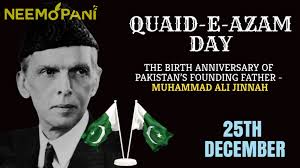
The foremost observance on the twenty-fifth of December holiday in Pakistan is undoubtedly Quaid-e-Azam Day. This is a full public holiday dedicated to honouring Muhammad Ali Jinnah, the revered leader whose unwavering vision and political acumen led to the creation of Pakistan as a separate homeland for the Muslims of the subcontinent in 1947. The day is imbued with a sense of solemn national pride rather than festive jubilation. It is a time for reflection on the principles upon which the state was founded: unity, faith, and discipline, as famously articulated by Jinnah himself. Government buildings, national monuments, and streets are adorned with the green and white of the Pakistani flag. The primary ceremony takes place at the Quaid’s magnificent mausoleum in Karachi, where high-ranking officials, military personnel, and the public gather to lay wreaths and offer fateha (prayers). Schoolchildren participate in essay competitions and speech contests centred on Jinnah’s life and ideology, ensuring that his legacy is passed on to younger generations. The day is punctuated by special documentaries and programming on national television, replaying his historic speeches and analysing his legal and political career. So, while the world may be immersed in Christmas festivities, Pakistan dedicates this day first and foremost to the remembrance of its founding father, reinforcing the foundational narrative of the nation. The holiday serves as an annual anchor point for national identity, a moment to recalibrate the country’s direction against the compass of Jinnah’s ideals. Understanding the 25th December
A Day of National Reflection and Ceremony
The formal ceremonies of Quaid-e-Azam Day are characterized by a dignified and respectful tone. The change of guard ceremony at the mausoleum is a poignant military tradition, showcasing the state’s enduring commitment to guarding the founder’s legacy. Speeches by the President and Prime Minister are broadcast nationwide, often emphasizing Jinnah’s vision of a democratic, progressive, and tolerant Pakistan where all citizens, regardless of faith, could live freely. National awards are sometimes conferred on this day to individuals who have made exceptional contributions to the country in various fields, linking contemporary achievement to the founder’s spirit. Furthermore, educational institutions and civil society organizations host seminars and discussions. These forums dissect Jinnah’s constitutional ideas, his stance on minority rights, and his views on the role of women in the new nation, providing academic depth to the public holiday. It is not merely a day off from work; it is an engaged, collective act of national memory. The mainstream narrative on this day, therefore, is intrinsically tied to statehood and nation-building. The media plays a crucial role in shaping this narrative, with newspapers publishing special editions featuring articles by historians and thought leaders. In essence, the 25th December holiday in Pakistan begins with this profound act of patriotic remembrance, setting a sober and reflective mood for the day before the quieter, parallel celebrations of Christmas begin in Christian enclaves across the country. Understanding the 25th December Jinnah’s Vision for Pakistan Understanding the 25th December
The Quiet Celebration: Christmas in Pakistan
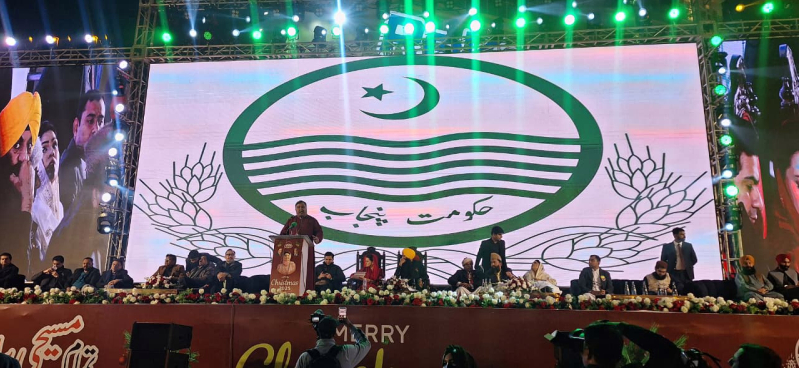
Parallel to the national ceremonies, the Christian community in Pakistan, though a minority, observes Christmas Day with devotion and joy. For Pakistani Christians, the 25th December holiday is a sacred religious occasion marking the birth of Jesus Christ, revered as a prophet in Islam. This theological common ground fosters a baseline of mutual respect. Christmas celebrations in Pakistan are generally community-centric and family-oriented, often observed with a distinct cultural flavour. Churches across the nation, from the grand St. Patrick’s Cathedral in Karachi to smaller parish churches in rural Punjab, hold special midnight and morning services. These services are beautifully decorated, and the hymns, sung in Urdu and regional languages, create a uniquely Pakistani soundscape for the Christmas story. The familiar narrative of the Nativity is recounted, connecting the local congregation to the global Christian tradition. After church services, families gather for festive meals. Traditional Pakistani cuisine like biryani and kebabs often shares the table with occasional Christmas treats like cake, reflecting a cultural blend. The exchange of gifts, while not as commercialized as in the West, is common among family members, especially children. In larger cities with significant Christian populations, one might find modest Christmas decorations in some neighbourhoods, and occasionally, small Christmas fairs or events are organized by community groups. The state, acknowledging its minority citizens, often issues messages of goodwill on the occasion, and sometimes government officials attend major church services as a gesture of solidarity. So, while the scale and public visibility are different, the essence of Christmas—faith, family, and charity—is very much alive in Pakistan, existing peacefully within the broader national observance of the day. Understanding the 25th December
Cultural Harmony and Community Practices
The simultaneous observance of these two events on the 25th December holiday in Pakistan presents a fascinating model of cultural coexistence. In workplaces and schools that have a mixed population, it is not uncommon for colleagues and classmates to exchange greetings for both occasions. A Muslim might wish their Christian colleague “Merry Christmas,” while receiving “Happy Quaid-e-Azam Day” in return. This simple social exchange is a microcosm of the day’s dual identity. In some instances, especially in urban centres and educational institutions, events are organized that touch on both themes—perhaps a presentation on Jinnah’s early life as a secular lawyer who defended minority rights, followed by a display of Christmas traditions. This fosters interfaith understanding. The media coverage also reflects this balance; morning broadcasts show the national ceremony at the mausoleum, while evening news packages might feature stories on Christmas services and how the community is celebrating. The government’s official holiday announcement typically respects both, often phrased as a holiday on account of “Quaid-e-Azam Day & Christmas.” This official recognition is crucial. It validates the holiday’s composite nature and signals the state’s nominal commitment to Jinnah’s Pakistan, where, as he stated in his inaugural address, “You are free; you are free to go to your temples, you are free to go to your mosques or to any other place of worship in this State of Pakistan.” Therefore, the day becomes a practical, yearly testament to this founding ideal, however complex its modern implementation may be. The holiday, in practice, becomes a lived experience of the nation’s professed pluralistic ethos, if only for a day. Understanding the 25th December
Historical Context of the Date
The historical coincidence that links the birth of Muhammad Ali Jinnah with the global celebration of Christmas is just that—a coincidence. Yet, it has shaped the unique character of the 25th December holiday in Pakistan. Jinnah was born on December 25, 1876, in Karachi, then part of British India. His political career, which culminated in the creation of Pakistan, ensured that his birthday would become a day of monumental importance for the new nation. At independence, the need for strong national symbols was paramount, and Jinnah’s persona was the central pillar. Designating his birthday as a national holiday was a natural step to institutionalize his memory and legacy. For the Christian community, whose history in the regions that became Pakistan predates the nation itself, Christmas had been observed long before 1947. The nascent Pakistani state, in a conscious effort to define itself as a modern nation for Muslims that also protected its minorities, included Christmas as a public holiday for its Christian citizens from the very beginning. This was a significant and inclusive gesture. Over the decades, as national narratives evolved, Quaid-e-Azam Day grew in ceremonial stature, becoming the dominant public face of the holiday. However, the state has consistently maintained the Christmas holiday, ensuring that the day accommodates both narratives. This historical layering means that the day is not static; its meaning is continually negotiated between the powerful state-driven nationalism of Quaid-e-Azam Day and the quieter, resilient faith-based observance of Christmas. Understanding this historical context is key to appreciating why the 25th of December is unlike any other holiday on the Pakistani calendar—it is simultaneously a looking back at the nation’s birth and a participating in the ongoing life of a minority community. Understanding the 25th December
How the Day is Observed Across the Country
The observance of the 25th December holiday in Pakistan varies significantly from region to region and community to community, painting a diverse national picture. In the federal capital, Islamabad, and provincial capitals like Lahore and Karachi, the state machinery is fully engaged in Quaid-e-Azam Day events. The main ceremony in Karachi draws the largest official crowd. In Lahore, a ceremony at the Minar-e-Pakistan might be held. Government offices and banks are closed, and the day feels like a standard public holiday for the Muslim majority, often spent with family or on outings. For the Christian community, the day is intensely active. In areas with large Christian populations, such as parts of Lahore (Youhanabad), Karachi (Eslam Nagar), and in rural villages in Punjab, the day is visibly festive. Churches are packed, and neighbourhoods may have a celebratory buzz. In contrast, in smaller towns or areas with few Christians, Christmas is a very private affair, observed within homes and local churches with little external visibility. For the average Pakistani Muslim not engaged in official ceremonies, the day might be a welcome mid-week break, a chance for leisure. However, the omnipresent media coverage of the national ceremony ensures that the day’s primary significance is communicated to all. This creates a shared national experience—watching the same ceremony on TV—while also allowing for parallel, community-specific observances. The holiday thus operates on two planes: the national/public plane dominated by Quaid-e-Azam, and the communal/private plane where Christmas is celebrated. This dual observance is a practical reality accepted by most Pakistanis, making the 25th of December a day that is both universally a holiday and personally defined. Understanding the 25th December
The Role of Media and Public Discourse
The media plays a pivotal role in framing the 25th December holiday in Pakistan for the public. From dawn, television channels begin live coverage from the Quaid’s mausoleum, with commentators providing historical context and analysing Jinnah’s relevance to contemporary issues. Newspapers print special supplements filled with articles on Jinnah’s political struggle, his legal mind, and his personal habits. This discourse overwhelmingly sets the tone for the day as one of nationalistic introspection. Later in the day, especially on news bulletins, channels will include segments on Christmas celebrations. These reports typically highlight church services, interview Christian community leaders about their celebrations and their hopes, and often touch upon issues of interfaith harmony. This media sequencing is telling: the national comes first, the minority observance second. Social media, however, offers a more decentralized and personal narrative. On platforms like Twitter and Facebook, hashtags for both #Quaid-e-AzamDay and #ChristmasInPakistan trend simultaneously. Users post pictures from the mausoleum, share quotes from Jinnah, and also share greetings, images of Christmas trees in their homes, and festive food. This digital space allows for a more organic intermingling of the two narratives. Public figures, including politicians and celebrities, often post dual messages, extending wishes for both occasions, which reinforces the official line of inclusivity. The media, therefore, is not just a reporter of the day’s events but an active participant in constructing its meaning, balancing the duty to project national unity with the responsibility to represent the country’s diversity. Understanding the 25th December Understanding the 25th December
Comparative Analysis with Other National Holidays
To fully grasp the uniqueness of the 25th December holiday in Pakistan, it is helpful to contrast it with other major national holidays. Pakistan’s two other primary national days are Pakistan Day (March 23) and Independence Day (August 14). Understanding the 25th December
| Holiday | Date | Primary Significance | Tone & Observance |
|---|---|---|---|
| Pakistan Day | March 23 | Commemorates the 1940 Lahore Resolution demanding a separate Muslim state. | Military parades, national resolve, display of cultural diversity. |
| Independence Day | August 14 | Marks independence from British rule and the creation of Pakistan in 1947. | Flag hoisting, fireworks, national songs, celebratory and festive. |
| 25th December Holiday | December 25 | Birthday of Quaid-e-Azam & Christmas. | Solemn ceremony for Jinnah; religious, community-based celebration for Christmas. |
As the table illustrates, while March 23rd and August 14th are purely national events focused on the state’s political genesis, the 25th of December is fundamentally different. It is a personal commemoration (a birth) that has been elevated to a national event, and it simultaneously accommodates a religious holiday for a minority. This makes it the most complex and layered holiday on the calendar. There is no military parade or public fireworks display; the focus is on an individual’s legacy and a religious community’s faith. This comparative view highlights that the 25th December holiday in Pakistan is less about the spectacle of the state and more about the pillars of identity and belief upon which the state stands, or at least, aspires to stand. Understanding the 25th December
Personal Stories and Anecdotes
Beyond the official narrative, the true flavour of the day is found in personal stories. A Muslim schoolteacher in Karachi might spend the morning watching the Quaid’s Day ceremony on TV with her children, explaining his importance, and then in the evening, deliver a plate of homemade seviyan (vermicelli pudding) to her Christian neighbours as a Christmas gesture. A Christian businessman in Lahore may attend a packed Christmas Eve service, host a family lunch on the holiday, and also take a moment to read the newspaper coverage of the national ceremony, feeling a dual sense of belonging—to his faith and to his country. For a student at a prestigious university, the day off might be a chance to work on a project about Jinnah’s constitutional thought, while receiving Christmas greetings from friends on WhatsApp. These micro-stories are the threads that weave the complex fabric of the day. They reveal a society where identities are not always mutually exclusive but can overlap in quiet, respectful ways. An anecdote often shared is of Christian citizens visiting the Quaid’s mausoleum on this day, paying respect to the founder who guaranteed their rights, before heading to their churches. These personal interactions and choices demonstrate how the theoretical duality of the holiday is navigated in everyday life, often with ease and mutual respect, showcasing a softer, more harmonious side of Pakistani society that is less frequently reported in international headlines. Understanding the 25th December
The Commercial and Economic Aspect
Unlike Christmas in the West, the 25th December holiday in Pakistan is not a major commercial driver. There is no nationwide shopping frenzy or significant retail promotion centred on Christmas. The commercial activity, if any, is highly localized to Christian neighbourhoods where small vendors might sell decorations, Santa hats, or festive cakes. For the vast majority of the economy, it is simply a public holiday like any other, leading to the closure of businesses, banks, and the stock exchange. However, some sectors see specific activity. Floral businesses experience a surge in demand for wreaths and bouquets used in the Quaid-e-Azam Day ceremonies. Media companies and newspapers generate special content, and advertising related to national pride might see a slight uptick. For the hospitality industry, the day off can mean an increase in family dining at restaurants, as is common on any public holiday. But crucially, there is no equivalent to “Boxing Day” sales or Christmas marketing blitzes. The economic footprint of the holiday is therefore modest and bifurcated: a small, niche market catering to the Christian community’s festive needs, and the formal, state-driven expenditures on the official ceremonies. This lack of overwhelming commercialization keeps the focus of the day on its commemorative and spiritual aspects, distinguishing it sharply from the consumer-oriented Christmas of many other countries. Understanding the 25th December
Global Perception and Local Reality
From outside Pakistan, the notion of a major holiday on December 25th that is not primarily about Christmas can be puzzling. International media, when covering Pakistan on this day, often runs stories that try to reconcile the two narratives, usually under headlines like “Pakistan’s Unique December 25th.” This external perspective tends to view the day as an interesting anomaly. For the global Christian diaspora, knowing that their co-religionists in Pakistan are celebrating amidst a different national narrative can be a point of connection and curiosity. However, within Pakistan, the local reality is normalized. For generations, Pakistanis have grown up with this dual understanding. It is not an anomaly to them; it is simply “the December holiday.” The global perception often seeks a tension or a conflict in this duality, but the local reality, for the most part, is one of accustomed coexistence. The day is a reminder that national calendars are not global monoliths but are shaped by specific historical trajectories. Pakistan’s 25th of December tells its own story—of a hard-worn nation born from a partition, led by a secular-minded lawyer, striving to find a balance between its Islamic identity and its minority citizens. This local reality is far more nuanced and settled than the global gaze sometimes assumes. Understanding the 25th December
Challenges and Controversies
Despite the general atmosphere of harmony, the 25th December holiday in Pakistan is not entirely free from underlying challenges and occasional controversies. The dominant narrative of Quaid-e-Azam Day can sometimes overshadow Christmas in the public sphere, leading to feelings of marginalization among some Christians who feel their religious holiday is treated as a secondary adjunct. Security concerns are a grim reality; churches and Christian neighbourhoods often operate under heightened alert on Christmas Eve and Day, a reminder of the vulnerability the community has faced from extremist elements. This security blanket, while necessary, can cast a shadow over the festivities. Furthermore, public discourse about Jinnah himself can be contentious. Liberals and secularists emphasize his early speeches on equal citizenship and a secular state, while religious conservatives highlight his identity as a Muslim leader creating a Muslim homeland. This debate about Jinnah’s “true” vision often simmers in the background of the day’s commentary. Occasionally, there are minor social media spats where someone might question the holiday for Christmas in an Islamic republic, but these are typically met with swift rebuke from mainstream voices quoting Jinnah’s guarantees. These challenges highlight that the peaceful coexistence symbolized by the day is an ongoing, sometimes fragile, achievement that requires constant vigilance and reaffirmation from both the state and civil society. Understanding the 25th December
The Future of the Holiday
Looking ahead, the future trajectory of the 25th December holiday in Pakistan will likely reflect the broader evolution of Pakistani society. As the country grapples with questions of national identity, religious tolerance, and minority rights, this day will remain a key barometer. If trends of interfaith dialogue and civic nationalism grow, we might see more integrated public events that consciously celebrate the day’s dual heritage, promoting a stronger message of shared citizenship. The media could play a more balanced role from the outset of the day. Conversely, if majoritarian pressures increase, the Christmas component could become more subdued in the public arena, relegated strictly to private spaces. The commitment of future governments to Jinnah’s pluralistic ideals will be directly mirrored in how the holiday is officially presented. For the Christian community, their demographic vitality and civic engagement will determine how vibrantly Christmas continues to be celebrated publicly. Ultimately, the holiday’s future hinges on whether Pakistan sees itself as a nation-state for Muslims where minorities are protected guests, or as a state for all its citizens where Muslim identity and national identity are harmonized with full equality for others. The 25th of December, every year, provides a moment to pause and assess which direction the nation is leaning. Understanding the 25th December
A Symbol of National Identity
In its totality, the 25th December holiday in Pakistan transcends being just a day off work. It has evolved into a potent symbol of the nation’s complex identity. It represents the undeniable centrality of Muhammad Ali Jinnah and the Partition movement to the Pakistani national consciousness. Simultaneously, it represents the formal, institutional space afforded to a religious minority—a living, if imperfect, embodiment of the founding father’s promise of freedom of worship. The day is a microcosm of the Pakistani experiment itself: a country founded on a religious identity that officially seeks to protect other religious identities within its fold. The tensions and harmonies of this experiment are all visible on this one day. It is a day for the flag and the founder, and also a day for the church and the Christ. How an individual Pakistani engages with the day—prioritizing one aspect, acknowledging both, or simply enjoying the break—reflects the multifaceted nature of belonging in this nation. Therefore, to understand Pakistan, one must understand the meaning of the 25th of December. It is not Christmas as the world knows it, nor is it merely a hero’s birthday; it is a unique national ritual that encapsulates history, faith, memory, and the ongoing struggle to define a collective self. Understanding the 25th December
FAQs: The 25th December Holiday in Pakistan
. Is December 25th a public holiday in Pakistan?
Yes, December 25th is a full public holiday across Pakistan.
2. What is the main reason for the holiday on December 25th in Pakistan?
The primary national reason is to celebrate the birthday of Pakistan’s founder, Muhammad Ali Jinnah, known as Quaid-e-Azam Day.
3. Do Pakistani Christians celebrate Christmas on this day?
Yes, the Christian minority in Pakistan celebrates Christmas on December 25th, and it is also a recognized public holiday for their observance.
4. How do most Pakistanis spend this day?
Many attend or watch ceremonies honouring Jinnah, spend time with family, and for the Christian community, attend church services and have festive gatherings.