
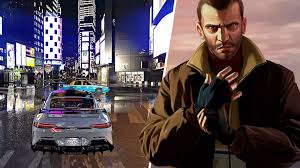
The persistent whispers and fervent online pleas have coalesced into a single, dominant demand within a segment of the gaming community: the call for a GTA 4 Remaster. This is not merely a passing fancy but a sustained campaign born from a deep appreciation for a title that represents a bold, gritty, and narratively ambitious pivot in the Grand Theft Auto series. While the towering shadow of Grand Theft Auto VI understandably consumes Rockstar Games’ present and foreseeable future, the discourse surrounding a potential GTA 4 Remaster has developed its own gravity. It speaks to a desire to revisit a specific moment in gaming history—a moment defined by a stark, uncompromising vision of the open-world crime saga—with the visual and technical clarity afforded by contemporary hardware. This article delves beyond the surface-level rumors to explore the tangible facets of what a GTA 4 Remaster could entail, the significant challenges it must overcome, its cultural relevance, and the complex logistics that govern its potential existence.
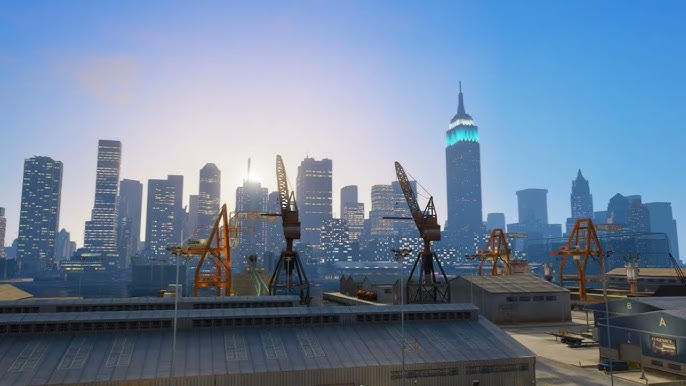
![A moody, high-concept render of Liberty City’s skyline under heavy rain, showcasing what modern ray tracing and atmospheric effects could bring to a GTA 4 Remaster.]
Liberty City’s iconic, brooding atmosphere is the perfect canvas for a modern visual overhaul in a potential GTA 4 Remaster.
GTA 4 Remaster and the Legacy of a Genre-Defining Pivot
To fully grasp the significance of the demand, one must contextualize the original game’s impact. Grand Theft Auto IV was a monumental risk. It eschewed the vibrant, almost cartoonish excess of Vice City and the sprawling, feature-rich playground of San Andreas for a focused, sobering recreation of a fictional New York City. The GTA 4 Remaster conversation is, at its core, a debate about preserving and re-presenting this artistic risk. The game’s protagonist, Niko Bellic, was not an aspirational gangster but a disillusioned war veteran, and his story was a bleak meditation on the elusive American Dream, revenge, and moral consequence. The game’s physics, powered by the Euphoria engine, introduced a then-unprecedented sense of weight and reactive chaos to the world. This commitment to a certain brand of realism forged a unique identity—one that was divisive but deeply respected. A GTA 4 Remaster represents the opportunity to sand away the technical limitations of 2008 and allow the stark power of its narrative and world-building to shine for a new generation, free from the distractions of blurry textures and dated control schemes.
GTA 4 Remaster Visual Potential: Reimagining the Gray and the Gritty
The most immediate and tantalizing prospect of a GTA 4 Remaster lies in its visual transformation. Liberty City, a masterclass in condensed urban design, is begging for a modern rendering. Imagine the steel-and-glass canyons of Algonquin with physically based rendering making every surface—from rain-slicked asphalt to polished marble lobbies—feel tangible. Ray-traced global illumination and reflections would transform the city’s iconic nightscapes, with neon signs from Star Junction painting dynamic, colorful light onto wet streets and car hoods. The often-gloomy color palette, a deliberate artistic choice to convey the city’s oppressive nature, would not be “brightened” but rather deepened, with a wider range of shadows and highlights adding nuance to the grays and browns. Pedestrian and traffic density, limited by the PlayStation 3 and Xbox 360, could be exponentially increased, finally realizing the “city that never sleeps” with seamless crowds that react intelligently. A true GTA 4 Remaster would not just increase resolution; it would use modern lighting, particle, and crowd systems to amplify the atmospheric melancholy that was always the game’s visual hallmark.

“A remaster of GTA IV isn’t about making it look like GTA V. It’s about using today’s technology to fully realize the grim, immersive, and incredibly detailed vision the team had in 2008, a vision that was constrained by the hardware of its time.” — Veteran Game Technology Journalist.
GTA 4 Remaster Gameplay Evolution: Honoring the Weight While Easing the Friction
A thoughtful GTA 4 Remaster must extend its ambitions beyond the cosmetic. The original’s gameplay, revolutionary in its commitment to weight and consequence, now feels notably dated in direct comparison to the refined systems of GTA V and Red Dead Redemption 2. The challenge for developers would be to modernize these systems without erasing the unique “feel” that defines the experience. The cover-based shooting mechanics could be overhauled to offer the fluidity and precision of Rockstar’s later titles, while perhaps retaining the lethal punch and recoil of GTA IV’s weapons. The celebrated vehicle handling, praised for its realistic weight and inertia, could be preserved at its core but subtly tuned for better controller responsiveness, finding a middle ground between simulation and accessibility. Quality-of-life improvements are non-negotiable: the addition of mission checkpoints, a more streamlined and less intrusive friend activity system, and an updated weapon wheel and map interface would remove persistent pain points. The goal of a GTA 4 Remaster in this regard should be to remove the friction of outdated design conventions while meticulously preserving the foundational physics and weight that made the world feel so startlingly real and unpredictable.

![A split-screen concept: On the left, the original GTA IV car crash with simpler physics; on the right, a reimagined crash in a remaster with enhanced deformation, detailed particle effects, and more complex pedestrian reactions.]
The iconic Euphoria physics could be spectacularly enhanced in a GTA 4 Remaster, making every interaction more dynamic and visually impressive.
GTA 4 Remaster Content Integration: The Complete Liberty City Tapestry
Any legitimate GTA 4 Remaster worthy of the name would be incomplete without the full integration of its episodic expansions: The Lost and Damned and The Ballad of Gay Tony. These were not mere side stories but essential counterpoints that completed the trilogy’s portrait of a city in economic and moral decay. A modern re-release would seamlessly weave these narratives into the fabric of the main game, potentially allowing players to switch between protagonists Niko, Johnny, and Luis from a unified menu, much like the later approach in GTA V. This would present Liberty City as a truly interconnected ecosystem of crime and consequence. Furthermore, restoring any songs lost to licensing issues over the years, while a complex legal endeavor, would be a crucial step in preserving the authentic audio atmosphere. The radio stations, from the electronic pulse of Electro-Choc to the talk radio absurdity of Integrity 2.0, are inseparable from the experience. A comprehensive GTA 4 Remaster would treat this entire package as a holistic work, ensuring that the complete, definitive saga of Liberty City is preserved and presented with uniform quality.
GTA 4 Remaster and the Shadow of The Trilogy Failure
No discussion about a potential GTA 4 Remaster can proceed without acknowledging the elephant in the room: the disastrous launch of Grand Theft Auto: The Trilogy – The Definitive Edition. That project, characterized by outsourced development, over-reliance on problematic AI upscaling, and a staggering number of technical failures, fundamentally altered the community’s trust. It serves as a dire warning of how not to handle beloved legacy titles. Consequently, the desire for a GTA 4 Remaster is now inextricably linked to a demand for stringent quality control, likely requiring significant hands-on involvement from Rockstar’s core technical teams. Fans are not asking for a quick, cash-grab port; they are advocating for a meticulous, from-the-ground-up effort that respects the source material’s complexity. The bar has been set by high-fidelity remasters like Demon’s Souls and Shadow of the Colossus—projects that rebuilt classic worlds with modern tech while honoring their original artistic souls. A GTA 4 Remaster must follow this blueprint of reverence and precision to regain community faith and justify its own existence.
| Aspect of Development | The Trilogy Definitive Edition Approach (What to Avoid) | Ideal GTA 4 Remaster Approach (What to Emulate) |
|---|---|---|
| Visual Overhaul | Reliance on automated AI upscaling, broken lighting. | Hand-crafted texture work, rebuilt lighting using original art direction as guide. |
| Technical Foundation | Unstable new engine layered poorly over old code. | Careful refactoring of original code, or a selective rebuild in a stable modern engine. |
| Quality Assurance | Clearly insufficient, riddled with game-breaking bugs. | Extensive, meticulous testing focused on preserving original gameplay feel and stability. |
| Community Communication | Silence before launch, reactionary patches after. | Clear, managed expectations if announced, highlighting the care taken in the process. |
GTA 4 Remaster Development Realities: Rockstar’s Focus and Resource Allocation
The single greatest obstacle to a GTA 4 Remaster is the monumental, all-consuming development of Grand Theft Auto VI. Rockstar Games has consolidated its global studios into a single mega-team dedicated to delivering what will likely be the most scrutinized and ambitious video game of the decade. In this environment, diverting significant internal resources to a remaster project is pragmatically unlikely. The company’s strategy has historically favored epoch-defining new experiences over retro projects. However, the commercial logic for a GTA 4 Remaster in the post-GTA VI landscape is potent. It could act as a high-margin legacy product, engaging the fanbase during the long content cycles typical of modern Rockstar games. It could also serve as a compelling counter-programming piece, reminding players of the franchise’s narrative depth and tonal range. The development might feasibly be handed to a trusted, highly capable external partner—but only under extremely close supervision from Rockstar’s senior creatives to avoid a repeat of past mistakes. The existence of a GTA 4 Remaster hinges on this calculus: whether Rockstar views it as a valuable curation of its own history or a peripheral distraction from its future.
GTA 4 Remaster Audio Revitalization: The Unseen Pillar of Atmosphere
While eyes are naturally drawn to graphics, the audio landscape is equally vital to the immersion of Liberty City. A GTA 4 Remaster would present a golden opportunity to revitalize this crucial component. The soundtrack, a curated mix of licensed music and Michael Hunter’s haunting, minimalist score, would benefit immensely from a high-definition, lossless audio mix. The ambient soundscape—the distant wail of sirens, the hum of the subway beneath the streets, the layered cacophony of different city districts—could be expanded and spatialized for modern surround sound and 3D audio technologies. This would make navigating the city even more immersive. Weapon sounds, vehicle engines, and the gruff chatter of pedestrians could all be re-recorded or remastered for greater punch and clarity. The iconic, often humorous phone calls from contacts would gain new life with clean audio. In a world as auditory-rich as Liberty City, treating the sound design as a mere afterthought in a GTA 4 Remaster would be a critical misstep. The audio is half the atmosphere, and its meticulous enhancement is non-negotiable for a truly definitive experience.
![A detailed concept image of the in-game phone interface, but rendered with modern high-resolution graphics, showing a call from Roman and the familiar backdrop of the Liberty City map.]
*Even the iconic, low-resolution phone interface of GTA IV would receive a sleek, high-fidelity update in a competent GTA 4 Remaster, blending nostalgia with modern clarity.*
GTA 4 Remaster and The Modding Community’s Proof of Concept
In the prolonged absence of official action, the PC modding community has effectively built its own GTA 4 Remaster, piece by piece. Extensive visual mods like “Grand Theft Auto IV: The Complete Edition” project, texture packs, Reshade presets, and lighting overhauls have demonstrated the stunning potential lurking within the old code. These mods do more than just keep the game alive; they act as a continuous, crowd-sourced proof-of-concept. They show what is possible when dedicated fans apply modern shading techniques, high-resolution textures, and performance optimizations. This grassroots effort underscores the enduring passion for the title and provides a visual benchmark against which any official release would be measured. However, mods are inherently fragmented, require technical expertise to install and stabilize, and are only available on one platform. The promise of an official GTA 4 Remaster is the promise of a unified, stable, and universally accessible version of these enhancements, professionally implemented and guaranteed to work across PlayStation, Xbox, and PC. https://gtaforums.com/
GTA 4 Remaster Cultural Timing: A Bridge Between Eras
The potential release timing for a GTA 4 Remaster is a fascinating strategic consideration. The most plausible scenario places it after the initial explosive launch and live-service cycle of GTA VI has settled. This could align with a notable anniversary, such as the game’s 20th in 2028. In this position, a GTA 4 Remaster would serve multiple purposes: it would cater to nostalgia, introduce a classic to millions of players who may have started with GTA V Online, and act as a revenue-generating legacy product during a natural lull. It could also function as a fascinating thematic bridge. If GTA VI returns to a vibrant, satirical Vice City, the GTA 4 Remaster would stand in stark contrast, reminding players of the franchise’s capacity for grit and melancholy. This deliberate juxtaposition could enrich the appreciation of both titles, highlighting the series’ evolutionary journey. Releasing it too close to GTA VI would risk overshadowing it; releasing it at the right moment could cement its status as a cherished piece of interactive history.
GTA 4 Remaster: The Preservation of a Specific Game Feel
This is the paramount challenge and the ultimate goal. A successful GTA 4 Remaster must be an exercise in precise preservation. It is not about transforming GTA IV into something it was not. The goal is to remove the technical murkiness to reveal the original artistic intent with newfound clarity. This means protecting the game’s specific “feel”: the heaviness of Niko’s movement, the deliberate pacing of its story, the consequences of its physics, and the oppressive mood of its city. Modernizing the user interface and refining aiming mechanics is essential, but replacing the weighty car handling with the arcade-like responsiveness of GTA V would be a betrayal. The color grading must enhance the gloom, not eliminate it. A GTA 4 Remaster that makes Liberty City as brightly colorful as Los Santos would fail. The test of its success will be emotional: does it make the player feel the same rain-soaked desperation, the same cynical humor, and the same tragic weight, only now with a startlingly clear window into that world? If it can achieve that, it will transcend being a simple product and become an act of cultural preservation.
![A side-by-side character model comparison: The original, low-poly Niko Bellic next to a detailed concept model showing modern facial capture, realistic skin texture, and nuanced eye expression.]
Character models would see one of the most dramatic upgrades in a GTA 4 Remaster, allowing the performances of Niko, Roman, and others to resonate with deeper emotional fidelity.
Conclusion: The Enduring Wait for a Clearer Liberty City
The discourse surrounding a GTA 4 Remaster is a testament to the lasting impact of a game that dared to be philosophically grim in a genre known for escapist excess. It is a request forged in respect, a collective hope to see a landmark achievement honored with the technical presentation its ambitious world and narrative have always deserved. While Rockstar Games holds its cards characteristically close, the commercial, cultural, and preservationist arguments for such a project continue to gain strength. It represents a chance to bridge generations of players, to celebrate a pivotal moment in the studio’s history, and to experience the poignant, rain-drenched tragedy of Niko Bellic without the barrier of aging technology. Whether this hope materializes remains one of the gaming community’s great unanswered questions. But the desire itself confirms one undeniable truth: the melancholic streets of Liberty City remain a destination worth revisiting, and a GTA 4 Remaster is the vehicle an entire community is waiting to take them there.
FAQs About a Potential GTA 4 Remaster
Q: Is a GTA 4 Remaster officially confirmed?
A: No official announcement has been made by Rockstar Games or its parent company, Take-Two Interactive. All information is based on fan speculation, industry rumors, and logical inference.
Q: What platforms would a GTA 4 Remaster likely release on?
A: It would almost certainly target the current generation of consoles (PlayStation 5, Xbox Series X/S) and PC, leveraging their hardware for the significant visual and performance upgrades demanded.
Q: Would a GTA 4 Remaster include the DLC episodes?
A: For it to be considered a definitive edition, it must include The Lost and Damned and The Ballad of Gay Tony. Their integration is a fundamental expectation of the community.