The allure of Grand Theft Auto Vice City is undeniable. A neon-soaked, synth-wave love letter to the 1980s, it stands as a cultural touchstone in video game history. But what happens when the disc drive is silent, and the old console is packed away? This is where the concept of a Grand Theft Auto Vice City browser experience enters the frame. It’s not about a single official game but the vast ecosystem of fan-driven innovation that has kept Vice City alive and accessible directly through your web browser. This article explores the fascinating world of experiencing Rockstar Games’ iconic title in the modern age without traditional installations—through demakes, fan projects, interactive maps, and the magic of emulation, all from the convenience of a browser tab. It’s a testament to the enduring legacy of a game that captured a decade’s essence and a community that refuses to let it fade into the digital sunset.
The spirit of Vice City transcends platforms, finding new life in the browser.
The Enduring Legacy of a Cultural Phenomenon
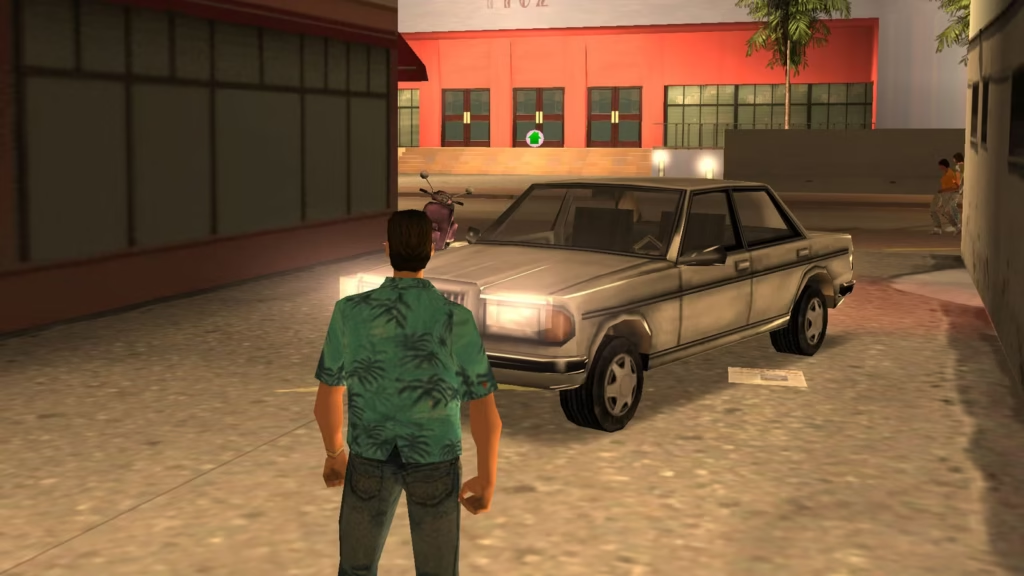
To understand why there is such a fervent drive to create a Grand Theft Auto Vice City browser experience, one must first grasp the game’s monumental impact. Released in 2002, Vice City was a quantum leap from its predecessor. It traded the gritty, noir-inspired streets of Liberty City for the vibrant, pastel-colored excess of a fictional Miami. The narrative, following Tommy Vercetti’s rise from a betrayed courier to a criminal kingpin, was infused with the cinematic flair of Scarface and Miami Vice. However, it was the atmosphere that sealed its legendary status. The sun-drenched beaches, the Art Deco architecture, the pulsating soundtrack featuring tracks from Toto, Michael Jackson, and Jan Hammer—every element coalesced into a perfect, albeit hyper-stylized, recreation of 1980s pop culture. This powerful, cohesive vision created an emotional connection with players that few games have managed to replicate. It wasn’t just a game; it was a destination, a mood, a time machine. This deep-seated nostalgia is the primary fuel for the community’s efforts to preserve and reimagine the experience, leading directly to the development of accessible, browser-based avenues to revisit this digital paradise. The desire to recapture that feeling with minimal friction is a powerful motivator, and so on, leading to ingenious technological workarounds.
Unpacking the “Browser Game” Concept for Vice City
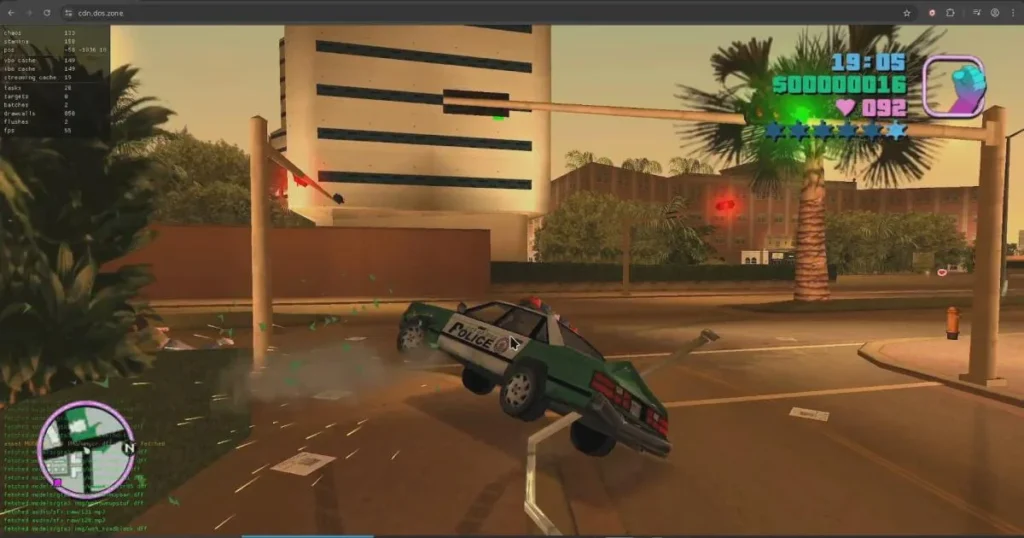
When we speak of a Grand Theft Auto Vice City browser game, it is crucial to clarify what this entails. Rockstar Games has not released an official, full-featured version of Vice City that runs natively in a browser like Chrome or Firefox. Instead, the term encompasses a spectrum of related experiences. At one end, you have sophisticated fan projects that use technologies like WebAssembly and JavaScript to port the core game engine to the web, allowing for shockingly faithful gameplay directly in a browser window. These are monumental technical achievements, often requiring significant reverse-engineering. Then, there are demakes and tributes—simplified, often pixel-art interpretations that capture the spirit of Vice City’s world and gameplay loops in a more lightweight, browser-friendly format. Furthermore, a wealth of auxiliary browser tools exists, such as detailed interactive maps that let you explore every inch of the city, mission guides, and asset viewers. Finally, cloud gaming services represent a commercial bridge, streaming the full, original game from powerful servers to your browser. Each of these approaches constitutes a different facet of the Grand Theft Auto Vice City browser ecosystem, offering unique ways to engage with the classic.
Type of Browser Experience
Description
Example
Fan-Made Port / Emulation
A technical project that runs a version of the original game engine directly in the browser.
Early experimental ports using WebAssembly.
Demake / Fan Game
A new game inspired by Vice City, often with retro graphics, built for web play.
Simple top-down shooters or adventures set in Vice City.
Interactive Tools & Maps
Non-game applications that let you explore data, locations, and assets from the game.
Fan-made Leaflet or Google Maps-style explorations of the city.
Cloud Game Streaming
Official services that stream the full PC/console game to your browser.
Services like NVIDIA GeForce Now or Boosteroid.
The Technical Wizardry Behind Browser Ports
The most ambitious attempts to create a true Grand Theft Auto Vice City browser experience hinge on modern web technologies. The cornerstone of this effort is WebAssembly (Wasm), a low-level binary instruction format that allows code written in languages like C++ to run on the web at near-native speed. Ambitious developers have taken the original game’s executable or its source code (where available through leaks or reverse engineering) and, through a process akin to magic, compiled it to target WebAssembly. This allows the complex 3D rendering, physics, and audio systems of a late-90s/early-2000s game to execute within the secure sandbox of a browser. Coupled with WebGL for graphics rendering and Web Audio API for sound, these projects can deliver a surprisingly complete slice of Vice City. However, these endeavors are fraught with legal and technical challenges. They often exist in a grey area of copyright law and require immense effort to get stable performance, handle asset loading, and manage memory within the browser’s constraints. They stand as remarkable proof-of-concepts, showcasing what is possible when passionate coders apply cutting-edge web tech to gaming classics.
“The web platform has evolved from a document viewer into a powerful application runtime. Projects that bring classics like Vice City to the browser are not just nostalgia trips; they are stress tests and demonstrations of the web’s true potential.” – A Web Developer’s Perspective.
The bridge between vintage game code and modern browsers is built on technologies like WebAssembly.
A Universe of Fan-Created Demakes and Tributes
Parallel to the technical ports exists a more creative and often more accessible realm: the fan-made demake. These are original games, built from the ground up using web-friendly tools like HTML5, JavaScript, and frameworks such as Phaser or Babylon.js. Their goal is not to replicate the original exactly but to evoke its essence through a new artistic and gameplay lens. You might find a top-down, 2D shooter where you control a pixelated Tommy Vercetti, cruising a blocky version of Ocean Drive and engaging in arcade-style combat. Another might be a point-and-click adventure focusing on the story’s noir elements. These Grand Theft Auto Vice City browser demakes are labors of love. They simplify the sprawling open world into key landmarks and distill the gameplay into its most addictive loops—driving, shooting, and causing glorious chaos. They are easier to share, play instantly, and often carry a charming, retro aesthetic that aligns perfectly with the game’s own nostalgic heart. They prove that Vice City’s core appeal—its style, attitude, and freedom—can be translated into vastly different formats and still resonate powerfully.
Navigating the World with Interactive Browser Tools
For many fans, the desire to engage with Vice City isn’t always about active gameplay. Sometimes, it’s about exploration, planning, or pure nostalgia. This is where a different category of Grand Theft Auto Vice City browser tools shines: the interactive map. These web applications use mapping libraries to present the entire game world as a scalable, clickable resource. You can toggle layers to see hidden packages, stunt jumps, unique vehicle locations, and property acquisitions. They function as the ultimate companion guide, transforming a static, printed map from 2002 into a dynamic, information-rich digital artifact. Beyond maps, other browser tools might include character model viewers, radio station players looping the iconic soundtrack, or databases of cheats and missions. These projects are less about reinventing the game and more about curating and presenting its data in the most useful, modern way possible. They serve as digital museums and strategy guides, preserving the minutiae of the game’s design for both new players and veterans looking to optimize their playthroughs.
The Legal and Ethical Landscape of Browser Gaming
The pursuit of a Grand Theft Auto Vice City browser experience inevitably treads into complex legal territory. Rockstar Games and its parent company, Take-Two Interactive, hold stringent intellectual property rights over the Vice City name, characters, code, and assets. Fan projects that directly use or distribute copyrighted game files (like models, textures, and audio) without permission are in clear violation of these rights and are routinely issued DMCA takedown notices. The most stable and complete projects often exist ephemerally, appearing on coding repositories or niche forums before being delisted. Projects that are “clean room” implementations—built entirely from scratch with original assets but inspired by the game—occupy a slightly safer, though still risky, space. The ethical consideration is one of preservation and passion versus copyright protection. Many argue these projects keep a culturally significant game alive on modern systems where official support may wane, and so on. However, publishers rightly defend their creative and commercial interests. This tension ensures the world of browser-based Vice City is one of passionate, underground innovation, constantly evolving in the shadow of corporate oversight.
Fan projects operate in a grey area, balancing love for the game with respect for copyright.
Cloud Gaming: The Official Browser Gateway
For players seeking a legitimate, high-fidelity Grand Theft Auto Vice City browser experience, cloud gaming has emerged as the premier solution. Services like NVIDIA GeForce Now, Amazon Luna, and Boosteroid host powerful gaming PCs in data centers. Users can subscribe to these services, purchase the official, definitive edition of Grand Theft Auto: The Trilogy – The Definitive Edition (which includes Vice City) on a platform like Steam or the Rockstar Launcher, and then stream it directly to their browser. This method requires no high-end local hardware, no complex installations, and no legal grey areas. You get the full, modernized (though debatedly so) version of the game, with controller support, playing in a browser tab. The experience is contingent on a strong, stable internet connection, as latency and compression can affect responsiveness and visual quality. However, it represents the most straightforward and commercially supported path to playing Vice City from a browser. It’s a testament to how technology has shifted, making even graphically intensive games accessible on nearly any device with a capable web browser and a good network.
The Role of Modding Communities and Web Archives
The vitality of the Grand Theft Auto Vice City browser scene is inextricably linked to the broader modding community. For over two decades, modders have deconstructed, understood, and rebuilt Vice City. They have created tools for editing maps, scripts, and models. This deep technical knowledge directly informs browser-based projects. A developer creating a browser demake might use modding tools to extract reference images or understand level geometry. Furthermore, the internet itself acts as a vast archive. Websites like The GTA Place, GTAForums, and mod repositories like GTAinside.com have preserved decades of fan work, tutorials, and assets. When a new developer gets the idea to build a browser tribute, these archives are their first stop for research and resources. The browser projects are, in many ways, the latest evolution of this modding spirit—applying contemporary web development skills to a beloved classic. They are part of an unbroken chain of community effort that has ensured Vice City remains relevant, playable, and endlessly reinterpreted.
The Aesthetic and Musical Heartbeat of Vice City Online
Any discussion of Vice City is incomplete without honoring its aesthetic and soundtrack—elements that browser projects strive desperately to capture. The visual identity, defined by pastel pinks and blues, neon signs, palm tree silhouettes, and Art Deco lines, is instantly recognizable. Browser demakes often use a color palette that directly references this, even in pixel art. The soundtrack, a defining feature, is legally impossible to include in fan projects, leading to creative solutions. Some projects implement systems for users to load their own MP3s, recreating the “radio station” feel. Others use original synth-wave compositions that sonically mimic the era of Jan Hammer and Laura Branigan. The challenge for any Grand Theft Auto Vice City browser experience is to trigger the same sensory nostalgia. A simple 8-bit rendition of the theme song, the specific hue of a sunset over Vice Point, or the low-poly shape of a Cheetah sports car—these are the shorthand symbols that tell a player’s brain they are “home” in this digital rendition of the 80s.
Comparative Analysis with Modern Browser Gaming
Placing these Vice City endeavors within the wider context of modern browser gaming reveals their unique position. Today’s browser games are often free-to-play, socially-driven, and built with hyper-casual or mid-core engagement loops in mind. They are designed for short sessions and mass appeal. A Grand Theft Auto Vice City browser project, by contrast, is almost always a passion project with zero monetization. Its goal is fidelity to a specific, complex, single-player experience from two decades ago. It is an exercise in preservation and homage rather than commercial design. Technologically, while modern web games use the same underlying tools (HTML5, WebGL), they are built with those constraints in mind from the start. Vice City browser ports are often trying to fit a square peg (a dense, C++-based 3D game) into a round hole (the web sandbox), making their existence all the more impressive. They are outliers, demonstrating that the browser can be a platform for deep, narrative-driven experiences, not just lightweight distractions.
The Future of Classic Games in the Browser
The trajectory of projects like these suggests a fascinating future for gaming heritage. As WebAssembly becomes more powerful and web APIs for storage, input, and graphics continue to evolve, the feasibility of running classic games directly in the browser will only increase. We may see more sophisticated frameworks emerge specifically designed to “wrap” old game executables for web deployment. The Grand Theft Auto Vice City browser experiments are pioneers on this frontier. Furthermore, there’s growing discussion about legal, official avenues for this. Could publishers like Rockstar someday partner with services to offer official, licensed browser-based versions of their back catalog? The commercial success of rereleases and remasters shows the market exists. Browser-based access could be the next logical step in making these titles perpetually accessible, reducing piracy and preserving them for future generations. The community’s current work is effectively prototyping that future, proving both the demand and the technical possibility.
Community projects today may be paving the way for an official future of streaming and browser-based classic games.
Conclusion: A Testament to Timeless Design
In the final analysis, the vibrant, persistent effort to create a Grand Theft Auto Vice City browser experience is the ultimate compliment to the original game’s design. It signifies a legacy that extends far beyond sales figures and review scores. Vice City built a world so compelling, a feeling so potent, that players and developers alike are driven to keep it alive by any means necessary—even if that means rebuilding it inside the most ubiquitous software on earth: the web browser. Whether through a technical marvel of emulation, a charming pixel-art demake, or an exhaustive interactive map, these projects ensure that the neon glow of Vice City never truly fades. They are a bridge between gaming’s past and its digital future, a community-powered preservation society, and a whole lot of fun. The dream of the 80s, it seems, is alive and well in a browser tab.
Frequently Asked Questions (FAQs)
Can I play the full Grand Theft Auto: Vice City game for free in my browser?
No, there is no legal, free, full version of the official game that runs in a browser. While impressive fan-made ports or demakes exist, they are often incomplete, technically limited, and exist in a legal grey area regarding copyrighted assets.
What is the best legal way to play Vice City in a browser?
The best legal method is through a cloud gaming subscription service like NVIDIA GeForce Now. You must purchase the official game on a linked platform (e.g., Steam), and then you can stream it to your browser from the service’s servers.
Are these browser projects safe to use?
Caution is advised. Only access projects from reputable community forums. Be wary of sites asking for downloads or excessive permissions, as they could contain malware. Cloud gaming services are the safest bet.